〔HAL Timezone Release Note 2.0〕
It’s time, HAL Timezone returns with a major extension. We are taking this opportunity to not only highlight all of the new and special features (spoiler alert: the update includes more than 400 languages), but also finally reveal the exclusive coming-of-age tale of this typeface (based on a true story). So please sit back and relax, make sure your seatbelt is securely fastened and enjoy the inflight entertainment.
Timezone 2026 World Tour
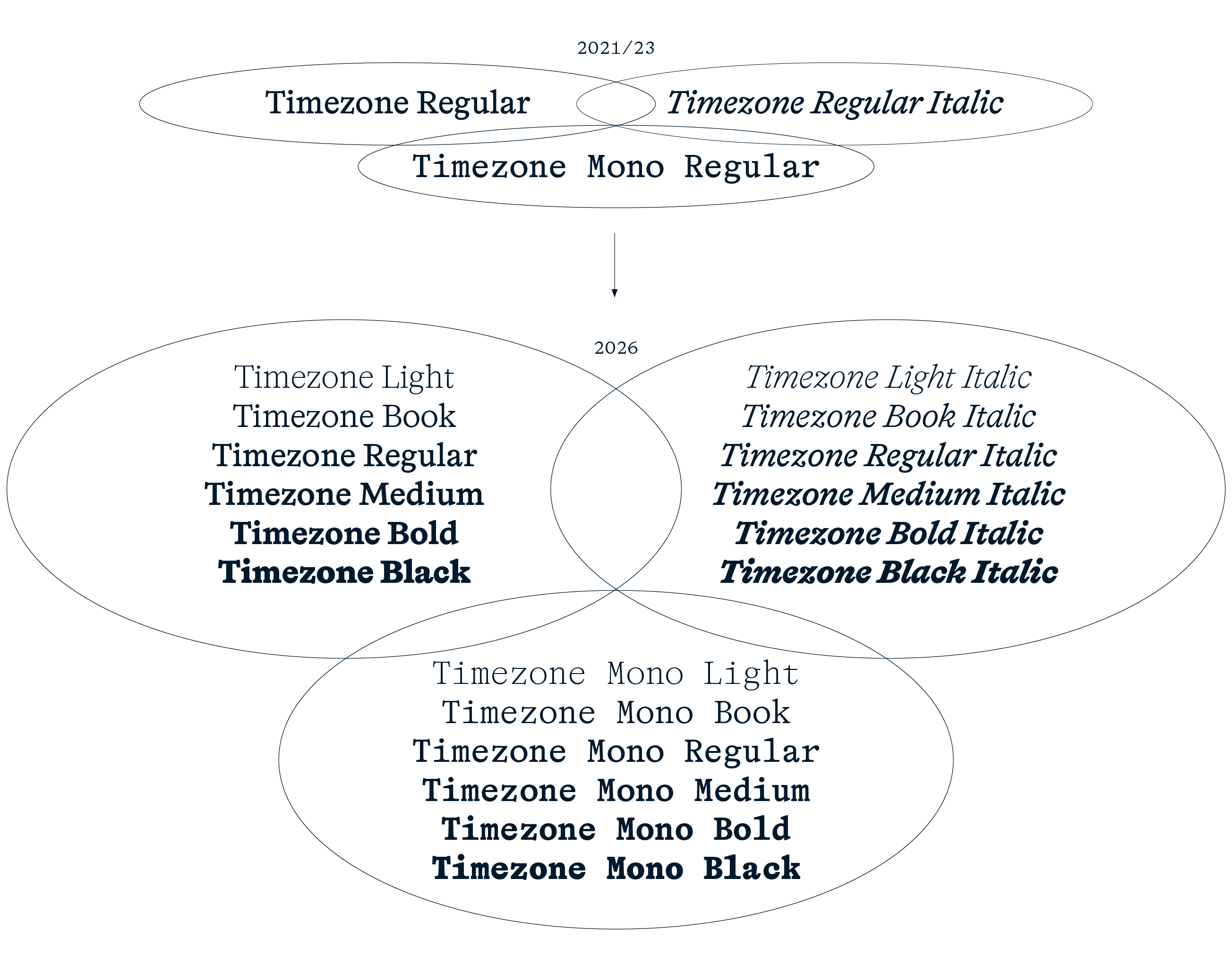
Timezone was originally published in 2021 as a compact release, limited to two styles at first: Regular and Regular Italic, with the addition of Mono Regular a couple years later. Part of the appeal is that it performs well in all sizes: as a robust and sturdy text font in small points (for both analog and digital environments) as well as a bold headline with attractive details in larger formats. Another reason perhaps being the plug-and-play approach: the ease of a one-weight family can sometimes be a relief to designers. No need for testing different weights and tackling rounds of decision making, just let Timezone do the work for you.

Over the years, however, we received many message from the Timezone fanbase requesting more versatility via lighter and heavier weights. Refined and intricate typesetting occasionally relies on more options and possibilities for defining hierarchies and so forth. (And the thought of potentially using a Light or Black style was very intriguing.) And so we brought Timezone through kindergarten, college and flight school to finally graduate and service the frequent flyers and fresh passengers. Before we dive into the upgrades, we wish to take you, dear reader, on a time travelling expedition to the humble origins of this font.

Tom Carnase
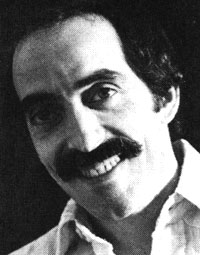
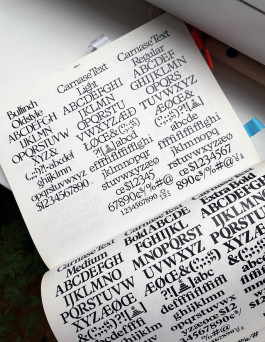
Once upon a time, while browsing through the second edition of Homage to the Alphabet: A Typeface Sourcebook, a phototypesetting font catalog by Phil’s Photo Inc. (1982), a low-contrast serif design named Carnase Text caught my eye. It was shown in five weights with corresponding, striking italics. We were tempted by its shapes and the fact that the serifs seemed to remain consistent in size across all weights. In the Light the serifs appeared too long and heavy, while in the Extra Bold they were rather small and shy. The face was designed by the legendary Tom Carnase and published in 1982 by the World Typeface Center. ❶ WTC (a.k.a. World Typeface Corporation) was co-founded 1980 in New York by Carnase (born in 1939 and most famous for his glorious ITC designs such as Avant Garde Gothic, Busorama, Honda, Machine, Ronda and Pioneer, to name a few).

WTC Carnase Text
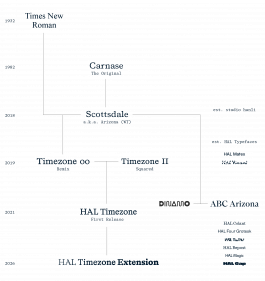
Elias made an exploratory, non-commercial revival, including a variable font with unchanging serifs. It was named after Tom Carnase’s location at the time: Scottsdale, Arizona. We started using it for some of Studio HanLi’s graphic design projects, but the revived typeface felt outdated. It was hard to overlook the 70s/80s vibe radiating from its original design, capturing some of the aesthetics and essence of that era, analogous to Carnase’s beautiful moustache (worthy of a Tom Selleck comparison, btw). The characters needed to look somewhat more timeless and neutral. But how? Well, Times New Roman never fails to add some vanilla. We forcefully blended Scottsdale and Times and a proto-Timezone was born (Times × Arizona = Timezone). Fun fact: the foundational experiments with Scottsdale’s variable font eventually led Elias to the conception and construction of ABC Arizona, which ultimately matured into Dinamo’s full-on, trans-genre, sans-to-serif superfamily.

Typeface Genealogy: The Time(zone)line

Relatively satisfied with this neutralising but messy merger, it was now time to clean it up and make sense of its shapes. The remix had created many awkward and roundish moments. Inspired by jagged beauties such as Preissig Antikva and Beowolf, we attempted an edgy direction, composing the forms with straight lines only. Conceptually interesting, but the result looked gimmicky and not very usable. This variant, however, presented the idea of slab-like serifs with angular connections. Simultaneously, Elias recalled some earlier non-related research into the design approach of Demos. Gerard Unger’s 1976 design is considered to be one of the earliest digital typefaces. ❷

Demos was constructed specifically for Rudolf Hell’s Digiset, introduced in 1965 as the first digital typesetter (photo-compositor). In this machine’s innovative process, the type was electronically externalised via a cathode ray tube (CRT), essentially as vertical beams of light (hence, the German term “Lichtsatz”) and then exposed photographically. Hell’s invention was an important rung on the historical ladder of type design, sitting right between the era of photo-type and the dawn of the pre-digital, screen-based future. Digiset’s letter shapes were stored as data on a dot-based grid, the predecessor of what would eventually become bitmap fonts. This form of dematerialisation was unprecedented, marking the first instance of type not directly bound to the representation on a physical medium.

Visuals from Unger’s essay “The Design of a Typeface” in Visible Language (1979)
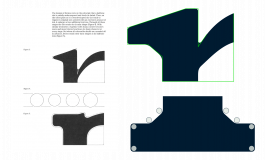
The good news: the Digiset could expose one million characters per hour, significantly surpassing the typesetting performance of previous machines. The bad news: the technology was so avant-garde, it could technically not be used with current fonts. Therefore, Hell and his team had to develop their own type (such as Digi-Grotesk, Heraldus, Olympia, Napoleon, Monanti) or commission new faces by external designers such as Herman Zapf (Aurelia, Marconi, Edison), Hans Eduard Meier (Barbedor) and Gerard Unger (Demos, Swift). Designing type on this crude CRT-grid was brutal. ❸ Unger cleverly decided to factor the technical restrictions and requirements of the both the photoelectronic exposure and the printing process into the design approach. The most crucial adjustment was completely avoiding sharp corners:
The design of Demos rests on the principle that a halftone dot is usually underexposed and tends to shrink. Then, on the offset plate as it is overdeveloped the dot tends to regain its original size; printed with an excessive amount of ink, it enlarges a few additional microns. Through all these stages the dot retains its circular shape. With similar treatment a typeface with sharp corners becomes more and more blunted and loses its sharp character at every stage. But when all vulnerable details are rounded off in advance, letters retain their basic shapes as do halftone dots.❹

“Rather than work against the requirements of the electronic process,
I designed Demos to work with it.” Gerard Unger
Returning to Timezone, we felt this simple concept was a smart detail that would make the typeface perform well in numerous settings across various media and its implementation fitted perfectly to the overall aesthetics of the previous design states. The typeface was taking shape and now headed in a genuine direction. The process of finding the right form on both the micro and macro levels took us down some winding paths of discovery. It was an unusual but satisfying journey to finally arrive at the true Timezone. Forward to a few years later and the font’s performance had deserved itself a sizeable upgrade.

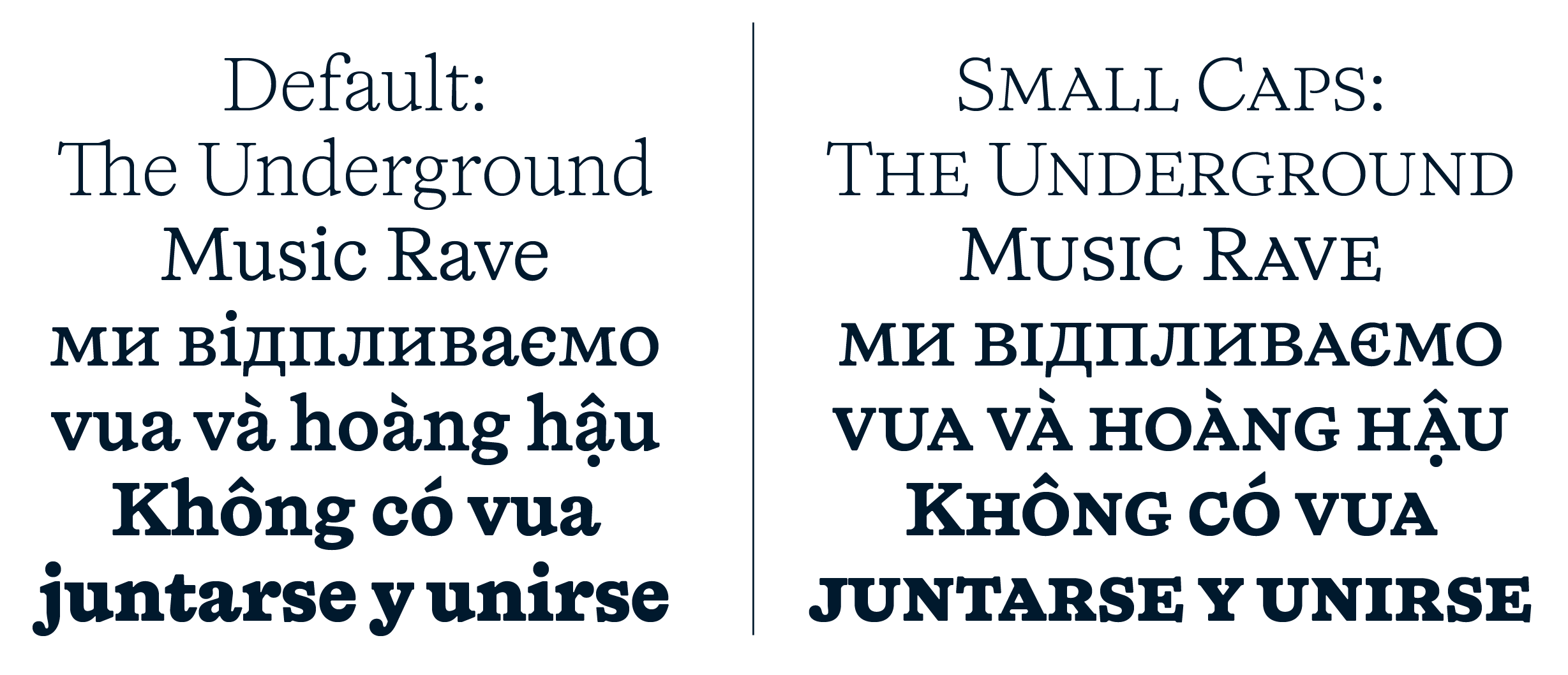
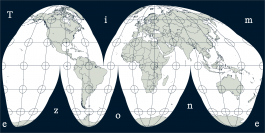
So, what happened? The character set was massively extended to include more languages, following Christoph Koeberlin’s Latin-S standard. ❺ And Timezone now also contains the entire Vietnamese diacritic set. Furthermore, it’s our first multi-script font with additional Cyrillic characters (thanks again to Sasha Kulikov for his help with this), making the typeface accessible to Cyrillic script users, including Belarusian, Bulgarian, Kazakh, Macedonian, Montenegrin, Russian, Serbian, Tajik, Ukrainian, Uzbek and more. In total, Timezone can handle nearly 500 languages according to Rosetta Type’s Hyperglot database. ❻ That’s more than three billion speakers, roughly 40% of the global population spread across multiple timezones. Pun intended.

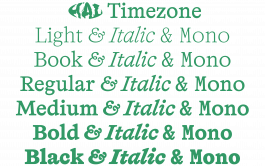
Another obvious update are the weight extensions, which now count six weights, ranging from Light, Book, Regular, Medium, Bold and Black for the uprights, italics and monospaced styles. The full family adds up to 18 styles in total. In order to tackle and fulfil the huge increase in character count, we gratefully relied on Alex Lescieux’s heavy-duty support. Timezone’s classic Small Caps had to work for all of the languages and scripts above… and for numerals, currency symbols, punctuation… and in the italic and mono styles. So yeah, that’s a hell of a lot of glyphs.

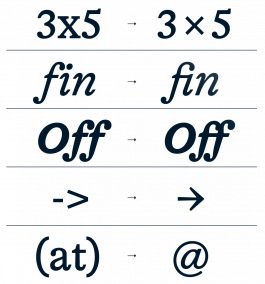
Contextual Alternates
We’ve kept and extended crucial ligatures, arbitrary fractions, circled numbers, and of course the oldstyle figures, whilst adding smarter opentype features with specific contextual alternates. And finally, the spacing and kerning was finessed by Igino Marini’s iKern engine. That sums up the 2.0, the result is colossal. It’s still the Timezone, that we all love and cherish, but grander and stronger— more efficient, versatile and far improved. In conclusion, we aim to make Timezone available to more global users in the future, servicing additional scripts and languages. The sky is the limit.
Until next time…
Lucas, HAL Typefaces

Footnotes
❶ Also worth checking out: WTC 145, the free-spirited, fun-loving, adventurous younger brother of Carnase Text.
❷ Praxis was published a year later in 1977 and marketed as the sans-serif companion to Demos, with the same corner-rounding concept.
❸ In his essay A brief overview of developments in digital type design, published on Medium, Ferdinand Ulrich describes the painstaking work that went into designing type for the Digiset in the 1970s.
❹ Gerard Unger, The Design of a Typeface in Visible Language, Vol. 13 No. 2 (1979), p. 136.
❺ Read more on Christoph Koeberlin’s Latin-S characterset here.
❻ Hyperglot is an open-source research project by Rosetta Type.
〔HAL Timezone Release Note 2.0〕
It’s time, HAL Timezone returns with a major extension. We are taking this opportunity to not only highlight all of the new and special features (spoiler alert: the update includes more than 400 languages), but also finally reveal the exclusive coming-of-age tale of this typeface (based on a true story). So please sit back and relax, make sure your seatbelt is securely fastened and enjoy the inflight entertainment.
Timezone 2026 World Tour
Timezone was originally published in 2021 as a compact release, limited to two styles at first: Regular and Regular Italic, with the addition of Mono Regular a couple years later. Part of the appeal is that it performs well in all sizes: as a robust and sturdy text font in small points (for both analog and digital environments) as well as a bold headline with attractive details in larger formats. Another reason perhaps being the plug-and-play approach: the ease of a one-weight family can sometimes be a relief to designers. No need for testing different weights and tackling rounds of decision making, just let Timezone do the work for you.

Over the years, however, we received many message from the Timezone fanbase requesting more versatility via lighter and heavier weights. Refined and intricate typesetting occasionally relies on more options and possibilities for defining hierarchies and so forth. (And the thought of potentially using a Light or Black style was very intriguing.) And so we brought Timezone through kindergarten, college and flight school to finally graduate and service the frequent flyers and fresh passengers. Before we dive into the upgrades, we wish to take you, dear reader, on a time travelling expedition to the humble origins of this font.

Tom Carnase
Once upon a time, while browsing through the second edition of Homage to the Alphabet: A Typeface Sourcebook, a phototypesetting font catalog by Phil’s Photo Inc. (1982), a low-contrast serif design named Carnase Text caught my eye. It was shown in five weights with corresponding, striking italics. We were tempted by its shapes and the fact that the serifs seemed to remain consistent in size across all weights. In the Light the serifs appeared too long and heavy, while in the Extra Bold they were rather small and shy. The face was designed by the legendary Tom Carnase and published in 1982 by the World Typeface Center. ❶ WTC (a.k.a. World Typeface Corporation) was co-founded 1980 in New York by Carnase (born in 1939 and most famous for his glorious ITC designs such as Avant Garde Gothic, Busorama, Honda, Machine, Ronda and Pioneer, to name a few).

WTC Carnase Text
Elias made an exploratory, non-commercial revival, including a variable font with unchanging serifs. It was named after Tom Carnase’s location at the time: Scottsdale, Arizona. We started using it for some of Studio HanLi’s graphic design projects, but the revived typeface felt outdated. It was hard to overlook the 70s/80s vibe radiating from its original design, capturing some of the aesthetics and essence of that era, analogous to Carnase’s beautiful moustache (worthy of a Tom Selleck comparison, btw). The characters needed to look somewhat more timeless and neutral. But how? Well, Times New Roman never fails to add some vanilla. We forcefully blended Scottsdale and Times and a proto-Timezone was born (Times × Arizona = Timezone). Fun fact: the foundational experiments with Scottsdale’s variable font eventually led Elias to the conception and construction of ABC Arizona, which ultimately matured into Dinamo’s full-on, trans-genre, sans-to-serif superfamily.

Typeface Genealogy: The Time(zone)line

Relatively satisfied with this neutralising but messy merger, it was now time to clean it up and make sense of its shapes. The remix had created many awkward and roundish moments. Inspired by jagged beauties such as Preissig Antikva and Beowolf, we attempted an edgy direction, composing the forms with straight lines only. Conceptually interesting, but the result looked gimmicky and not very usable. This variant, however, presented the idea of slab-like serifs with angular connections. Simultaneously, Elias recalled some earlier non-related research into the design approach of Demos. Gerard Unger’s 1976 design is considered to be one of the earliest digital typefaces. ❷

Demos was constructed specifically for Rudolf Hell’s Digiset, introduced in 1965 as the first digital typesetter (photo-compositor). In this machine’s innovative process, the type was electronically externalised via a cathode ray tube (CRT), essentially as vertical beams of light (hence, the German term “Lichtsatz”) and then exposed photographically. Hell’s invention was an important rung on the historical ladder of type design, sitting right between the era of photo-type and the dawn of the pre-digital, screen-based future. Digiset’s letter shapes were stored as data on a dot-based grid, the predecessor of what would eventually become bitmap fonts. This form of dematerialisation was unprecedented, marking the first instance of type not directly bound to the representation on a physical medium.

Visuals from Unger’s essay “The Design of a Typeface” in Visible Language (1979)
The good news: the Digiset could expose one million characters per hour, significantly surpassing the typesetting performance of previous machines. The bad news: the technology was so avant-garde, it could technically not be used with current fonts. Therefore, Hell and his team had to develop their own type (such as Digi-Grotesk, Heraldus, Olympia, Napoleon, Monanti) or commission new faces by external designers such as Herman Zapf (Aurelia, Marconi, Edison), Hans Eduard Meier (Barbedor) and Gerard Unger (Demos, Swift). Designing type on this crude CRT-grid was brutal. ❸ Unger cleverly decided to factor the technical restrictions and requirements of the both the photoelectronic exposure and the printing process into the design approach. The most crucial adjustment was completely avoiding sharp corners:
The design of Demos rests on the principle that a halftone dot is usually underexposed and tends to shrink. Then, on the offset plate as it is overdeveloped the dot tends to regain its original size; printed with an excessive amount of ink, it enlarges a few additional microns. Through all these stages the dot retains its circular shape. With similar treatment a typeface with sharp corners becomes more and more blunted and loses its sharp character at every stage. But when all vulnerable details are rounded off in advance, letters retain their basic shapes as do halftone dots.❹

“Rather than work against the requirements
of the electronic process, I designed
Demos to work with it.” Gerard Unger

Returning to Timezone, we felt this simple concept was a smart detail that would make the typeface perform well in numerous settings across various media and its implementation fitted perfectly to the overall aesthetics of the previous design states. The typeface was taking shape and now headed in a genuine direction. The process of finding the right form on both the micro and macro levels took us down some winding paths of discovery. It was an unusual but satisfying journey to finally arrive at the true Timezone. Forward to a few years later and the font’s performance had deserved itself a sizeable upgrade.

So, what happened? The character set was massively extended to include more languages, following Christoph Koeberlin’s Latin-S standard. ❺ And Timezone now also contains the entire Vietnamese diacritic set. Furthermore, it’s our first multi-script font with additional Cyrillic characters (thanks again to Sasha Kulikov for his help with this), making the typeface accessible to Cyrillic script users, including Belarusian, Bulgarian, Kazakh, Macedonian, Montenegrin, Russian, Serbian, Tajik, Ukrainian, Uzbek and more. In total, Timezone can handle nearly 500 languages according to Rosetta Type’s Hyperglot database. ❻ That’s more than three billion speakers, roughly 40% of the global population spread across multiple timezones. Pun intended.

Another obvious update are the weight extensions, which now count six weights, ranging from Light, Book, Regular, Medium, Bold and Black for the uprights, italics and monospaced styles. The full family adds up to 18 styles in total. In order to tackle and fulfil the huge increase in character count, we gratefully relied on Alex Lescieux’s heavy-duty support. Timezone’s classic Small Caps had to work for all of the languages and scripts above… and for numerals, currency symbols, punctuation… and in the italic and mono styles. So yeah, that’s a hell of a lot of glyphs.

Contextual Alternates
We’ve kept and extended crucial ligatures, arbitrary fractions, circled numbers, and of course the oldstyle figures, whilst adding smarter opentype features with specific contextual alternates. And finally, the spacing and kerning was finessed by Igino Marini’s iKern engine. That sums up the 2.0, the result is colossal. It’s still the Timezone, that we all love and cherish, but grander and stronger— more efficient, versatile and far improved. In conclusion, we aim to make Timezone available to more global users in the future, servicing additional scripts and languages. The sky is the limit.
Until next time…
Lucas, HAL Typefaces

Footnotes
❶ Also worth checking out: WTC 145, the free-spirited, fun-loving, adventurous younger brother of Carnase Text.
❷ Praxis was published a year later in 1977 and marketed as the sans-serif companion to Demos, with the same corner-rounding concept.
❸ In his essay A brief overview of developments in digital type design, published on Medium, Ferdinand Ulrich describes the painstaking work that went into designing type for the Digiset in the 1970s.
❹ Gerard Unger, The Design of a Typeface in Visible Language, Vol. 13 No. 2 (1979), p. 136.
❺ Read more on Christoph Koeberlin’s Latin-S characterset here.
❻ Hyperglot is an open-source research project by Rosetta Type.
Notes
©2026 HAL Typefaces, Studio HanLi
Notes
©2026 HAL Typefaces, Studio HanLi